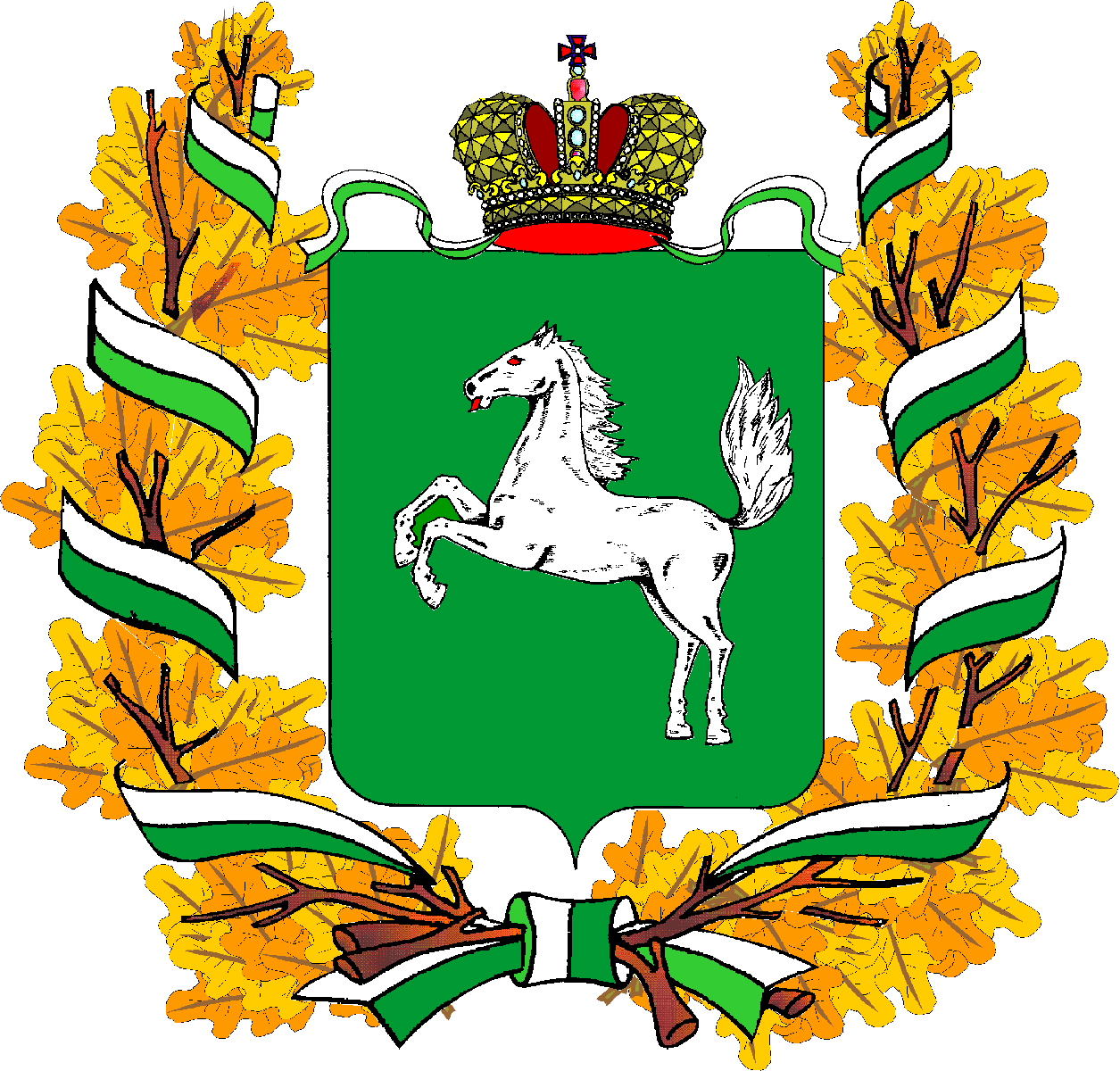
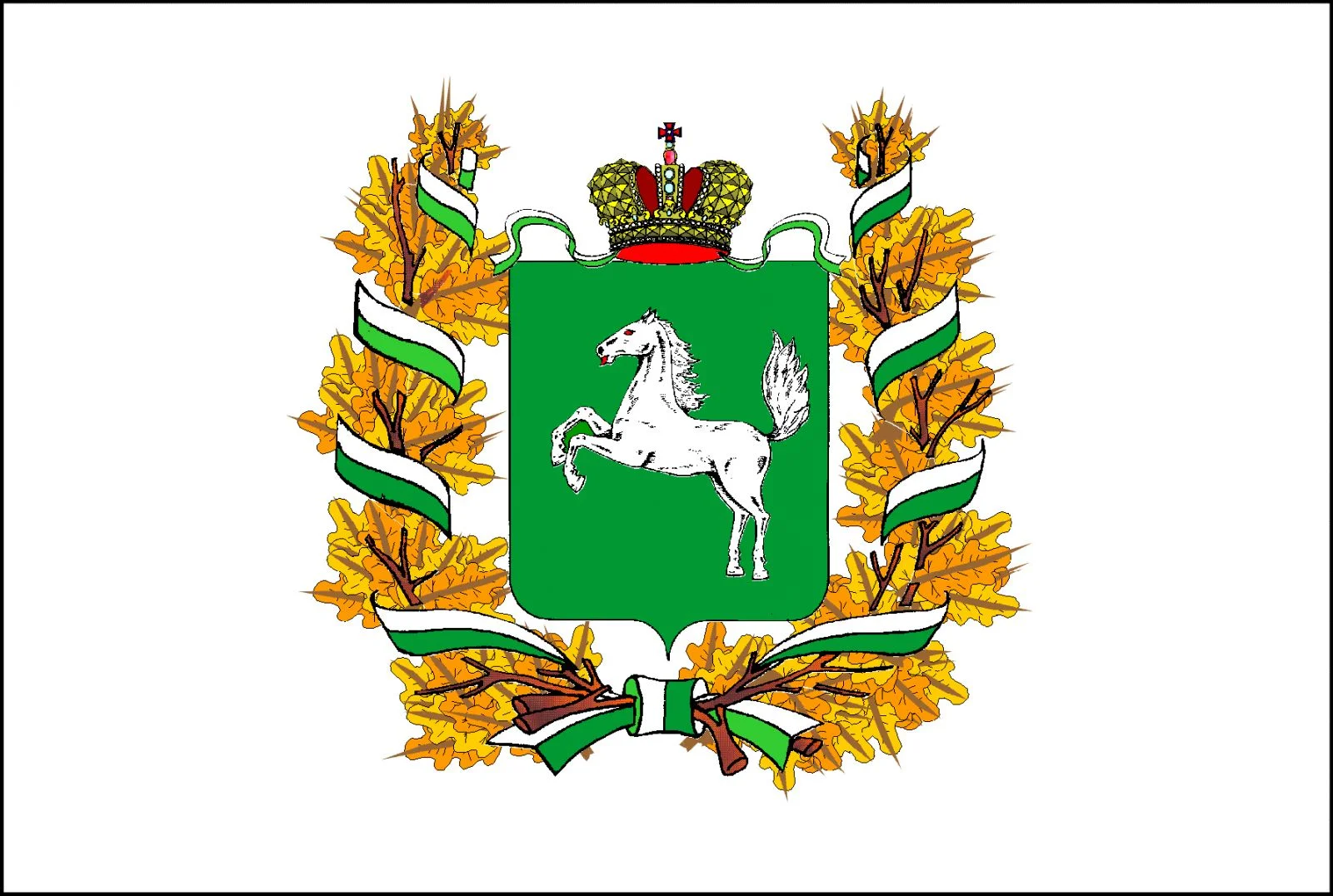
Regional flags and emblems
PROFILE
Established 13 August 1944
Capital Tomsk
The Tomsk Region is part of the Siberian Federal District
Area 314,400 sq km
Population 1 039 700 (2026)
Ethnic groups
(2020 national census, %)
Russian – 93,38
Tatar – 1,20
Other – 5,42
Administrative divisions (2026)
Municipal districts –16
Municipal areas – 1
City districts – 3
Rural towns – 3
Rural districts – 112
Geography and climate
The Tomsk Region is located in the geographic center of Siberia. It borders on the Krasnoyarsk Territory, and the Kemerovo, Novosibirsk, Omsk, and Tyumen regions, and the Khanty-Mansi Autonomous Area – Yugra. The main river is the Ob with tributaries: the Tom, Chulym, Ket, Tym, Chaya, Parabel and Vasyugan. Mirnoye is the largest lake.
The climate is continental. January temperatures average –17,7°C. July temperatures average +20.0°C. Precipitation averages 26 mm in January and 42 mm in July. The frost-free period lasts from 100 to 105 days. The growing season lasts for 135–140 days in the north, 150 days in the south.
The region has Vasyganskiy State Nature Reserve, 18 regional nature sanctuaries, a Siberian botanical garden at Tomsk State University.
Government
The legislative branch is the Tomsk Region Duma, which is the permanent, representative and only body of legislative authority in the region. Deputies are elected for five years.
The Tomsk Region Duma has 42 deputies elected for five years, with 21 running in single-member constituencies and the other 21 in the single electoral district, where winners are identified in proportion to the number of votes cast for lists of candidates nominated by electoral associations. The current Tomsk Region Duma was elected in September 2021 for a term of 5 years.
The system of executive bodies of the Tomsk Region includes the Governor of the Tomsk Region, the Government of the region, and other executive bodies of the region. The Government of the Tomsk Region is the supreme permanently functioning collegial executive body of the region. The Governor of the Tomsk Region forms the Government of the region, and appoints and dismisses the Chairman of the Government of the Tomsk Region.
The Governor of the Tomsk Region is the region’s highest-ranking official who heads the executive branch in the Tomsk Region and determines the structure of executive bodies in the Tomsk Region. The Governor is elected for 5 years by Russian citizens who permanently reside in the region. The current governor’s term expires in September 2027.
Economy and natural resources
Industrial output accounts for about 40% of the regional GDP. Oil and gas, chemical, petrochemical, engineering, nuclear energy, electricity, timber and food processing are the region’s main industries.
The region is home to one of the leading enterprises of the Rosatom State Corporation – JSC ”Siberian Chemical Combine“, which is implementing the ”Proryv“ (Breakthrough) project, providing for the creation of a new generation of nuclear energy technologies. The largest enterprises of the petrochemical industry are LLC ”Tomskneftekhim“ and LLC ”Siberian Methanol Chemical Company“.
Major investment projects for the production of new pharmaceutical products have been implemented in the region. These include JSC ”Pharmstandard‑Tomskkhimfarm“ and SPA ”Virion“ (a branch of JSC SPA ”Microgen“ in Tomsk).
The leading companies in mechanical engineering are JSC ”Sibkabel“, JSC ”Tomsk Electromechanical Plant“, JSC ”SPC Polyus“, JSC ”Manotom“, LLC ”EleSi“, JSC ”SPF Mikran“, the ”SIAM“ Company, LLC ”SPE Tomsk Electronic Company“, and others. Tomsk industrial enterprises are suppliers of import‑substituting products for major Russian holdings – PJSC ”Gazprom“, PJSC ”Gazpromneft“, PJSC ”Inter RAO“, PJSC ”Rosseti“, and PJSC ”Sibur Holding“.
Almost 2,000 construction companies as well as 160 building supply producers are in the construction sector.
The Tomsk Region is among the top twenty major oil‑producing regions of the country. Among the enterprises of the oil‑and‑gas sector, the largest oil company in the region is JSC ”Tomskneft“, which accounts for approximately 60% of the oil extracted.
In terms of total timber reserves, the region ranks 3rd in the Siberian Federal District and 7th in the Russian Federation. In addition to large enterprises such as LLC ”Tomlesdrev“ and JSC ”Ruskitinvest“, over 100 medium‑ and small‑sized enterprises operate in the region. A significant volume of investment in the development and creation of logging and wood‑processing capacities has made it possible to establish centres for deep and comprehensive wood processing in Tomsk and Asino, as well as to identify prospects for the sustainable development of the forestry sector.
Agriculture generates approximately 4% of the gross regional product. The region’s agro‑industrial complex specialises in meat‑and‑dairy livestock farming, fully supplying the region with pork, poultry and potatoes. The largest agro‑industrial enterprises of the region are ”Siberian Agricultural Group“, ”Mezheninovskaya Poultry Farm“ and ”Tomskaya Poultry Farm“, and ”Tomsk Food Company“. The main milk producers are the pedigree farms JSC ”Dubrovskoye“, LLC ”Breeding Farm Zavarzino“, Agricultural Production Cooperative ”Nelyubino“, and LLC ”Zonal Compound Feed Plant“.
Culture and tourism
The Tomsk Region’s cultural areas combine remnants of ancient archaeological cultures (Samus, Molchanovo, Kulaika and Ryolka) as well as customs and traditions of the indigenous Siberian peoples (Siberian Tatars, Selkups, Khanty, Evenks and Chulyms), Russian settlers and numerous national diasporas (Polish, German, Estonian and other).
The region’s cultural institutions include regional and municipal museums, professional theatres, a philharmonic hall with one of the best Russian organ halls, galleries and artistic workshops as well as clubs and cultural centers and libraries.
The region has over 700 Russian cultural heritage sites (historical and cultural landmarks), more then half of them has status of federal importance.
Tomsk State University and Tomsk Polytechnic University are part of national valuable cultural heritage.
Wooden architecture is an important part of the image of the Tomsk Region.
Regional tourism is a young and actively growing economic field represented by over 130 sites and 180 hotels of various types capable of accommodating at least 4,000 people in total. There are also farming and hunting grounds, tourist bases, guesthouses, campsites and eco-villages. Travel agencies offer over 70 types of tours, depending on the theme, the sector of the economy or the museum, as well as about 20 types of comprehensive tourist programmes. Tourists will be particularly interested in national culture and holidays, which are key drivers of ethnic and event tourism.